DbGate | Database manager, which runs everywhere


DbGate
DbGate

Introduction

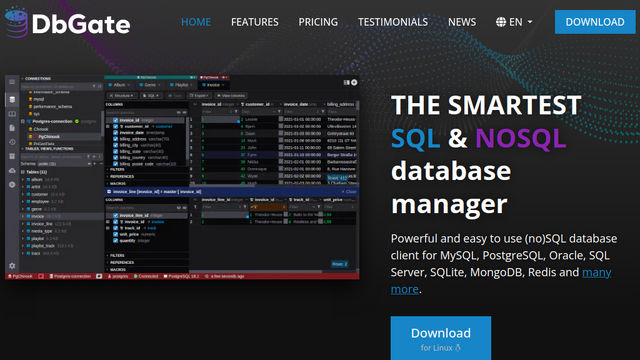
DbGate is an open-source, cross-platform database management tool designed to be simple, fast, and extensible. It supports a wide variety of SQL and NoSQL databases, including MySQL, PostgreSQL, SQL Server, MongoDB, and Redis. Unlike many heavy-duty database clients, DbGate offers a lightweight footprint and can be run as a desktop application for Windows, Linux, and macOS, or as a web-based application through a Docker container, providing a consistent experience across different operating environments.

Use Cases

  • Multi-Engine Database Management
    Manage diverse database types like PostgreSQL, MySQL, and MongoDB within a single, unified interface.
  • Database Schema Comparison
    Compare the structures of two databases and generate synchronization scripts to align development and production environments.
  • Visual Data Exploration
    Browse large datasets using powerful filtering, sorting, and form view options to inspect individual records easily.
  • Query Building for Non-SQL Users
    Utilize the visual query designer to build complex data lookups without manually writing SQL code.
  • Remote Database Administration
    Deploy DbGate as a web-based client via Docker to provide secure, browser-based database access for remote teams.

Features & Benefits

  • Broad Database Support
    Native support for SQL engines (MySQL, Postgres, SQL Server, SQLite) and NoSQL engines (MongoDB, Redis).
  • Cross-Platform Flexibility
    Operates as a native desktop application or a web-based client, ensuring accessibility on any device.
  • Powerful Query Editor
    Features a professional-grade SQL editor with autocomplete, syntax highlighting, and execution history.
  • Extensible Plugin System
    Allows developers to create and install plugins to support new database drivers or custom interface themes.
  • Import and Export Wizards
    Easily migrate data between formats and databases, including support for CSV, JSON, and Excel files.

Pros

  • Open Source and Free
    Licensed under the MIT license, providing full functionality without licensing costs or enterprise subscriptions.
  • Lightweight Performance
    Fast startup times and low memory consumption compared to Java-based competitors.
  • Modern User Interface
    Clean, intuitive UI that balances powerful features with ease of use.
  • JSON and Form Views
    Excellent support for modern data types, making it easy to view nested JSON structures.

Cons

  • Smaller Community
    Has a smaller ecosystem of tutorials and community support compared to veteran tools like DBeaver.
  • Limited Advanced Enterprise Reporting
    Lacks some of the high-end reporting and charting features found in premium commercial suites.
  • UI Customization
    While extensible, deep UI customization options are currently more limited than some competitors.

Tutorial

None

Pricing


Popular Products