Tauri 2.0 | Build smaller, faster, and more secure desktop and mobile apps
Tauri
Introduction
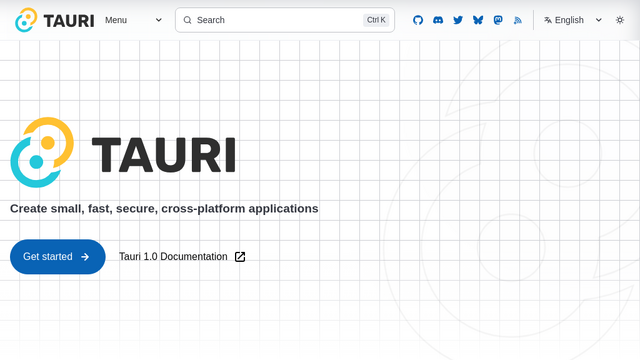
Tauri is an open-source framework designed to help developers build cross-platform desktop and mobile applications using web technologies for the user interface and Rust for the backend. Unlike Chromium-based frameworks, Tauri leverages the operating system’s native webview, resulting in extremely small binary sizes and superior performance. Version 2.0 expands its capabilities to include full support for mobile platforms, including iOS and Android, making it a comprehensive solution for multi-platform development.
Use Cases
Cross-Platform Desktop Development
Building high-performance applications for Windows, macOS, and Linux using a single codebase.
Native Mobile Apps
Developing lightweight and secure applications for iOS and Android using familiar web frameworks.
System-Level Utilities
Creating background processes, tray applications, and system monitors that require low memory overhead.
Legacy Web App Modernization
Packaging existing web-based dashboards or tools as standalone, secure desktop executables.
Secure Enterprise Solutions
Developing software that requires strict isolation and granular permission control for system resource access.
Features & Benefits
Native WebView Architecture
Utilizes system-native web engines like WebKit or WebView2 to drastically reduce bundle size and RAM usage.
Rust-Powered Backend
Ensures memory safety and high-speed execution for core application logic and system interactions.
Granular Security Model
Features a ‘Capabilities’ system that allows developers to define exact permissions for API and system access.
Frontend Agnostic
Supports any modern web framework such as React, Vue, Svelte, or Next.js for building the UI.
Multi-Platform Distribution
Provides built-in tooling for packaging, code-signing, and updating apps across all major desktop and mobile OSs.